Arishadvargas and Antahkarana
Inner Orientation and Responsible Clarity in Challenging Times
In times of external uncertainty and inner unrest, the Yoga tradition has always invited practitioners to return to primary principles – not as abstract philosophy, but as living inner guidance. Within the system of Yoga in Daily Life®, founded and authored by Vishwaguruji Paramhans Swami Maheshwarananda, two fundamental teachings provide particular stability and orientation: the arishadvargas and the antahkarana.
These teachings form an inner compass, through which individuals and communities alike learn to navigate personal, social and collective challenges – especially when emotions, loyalties, fear, or confusion risk overshadowing discernment and responsibility.
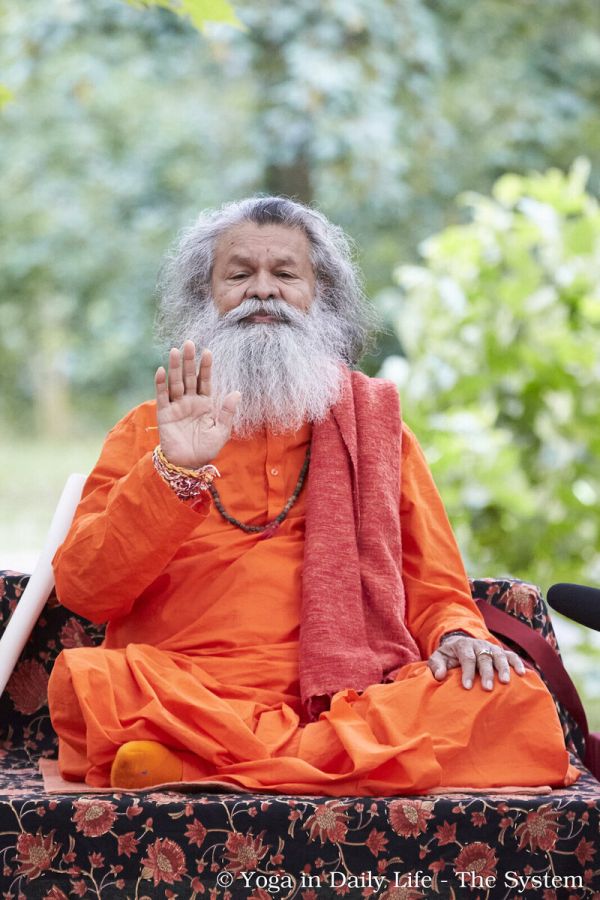
The Arishadvargas – Understanding the Inner Forces
The arishadvargas, also known as shad-ripu, describe the six inner adversaries or enemies of the mind that disturb the clarity, balance and harmony of consciousness:
- kāma – uncontrolled desire
- krodha – anger and resentment
- lobha – greed and possessiveness
- moha – delusion and confusion
- mada – pride and arrogance
- mātsarya – jealousy and rivalry
In his satsangs, Vishwaguruji repeatedly emphasised that these forces are not theoretical constructs, but living inner tendencies that influence perception, motivation and action. When they remain unrecognised, they cloud buddhi (intellect), inflate ahamkāra (ego), agitate manas (mind), and leave deep impressions in chitta (consciousness) – often resulting in actions that lack humility, compassion and ethical clarity.
Yoga does not seek to suppress these tendencies. It aims to illuminate and transform them through awareness, self-discipline, prayer, ethical living and sustained inner observation.
Antahkarana – the Inner Instrument of Consciousness
The antahkarana refers to the inner psychic apparatus through which all experience is processed. It consists of four interrelated functions:
- manas – the thinking and sensing mind
- buddhi – the faculty of discrimination, intellect and wisdom
- ahamkāra – the ego sense of 'I' and identification
- chitta – the consciousness, a storehouse of impressions and perceptions
According to Vishwaguruji, true spiritual maturity is not measured by outer roles, influence, or activity, but by the purity, balance, and alignment of the antahkarana.
When buddhi is clear, manas is calm, ahamkāra is humble, and chitta is purified, right action arises naturally – without coercion, emotional reactivity or ego-driven ambition.
This inner clarity becomes especially vital when external circumstances are complex, emotionally charged, or ethically sensitive.
The Living Wisdom of the Sacred Scriptures
In his discourses, Vishwaguruji has frequently drawn upon the timeless wisdom of classical ancient scriptures such as the Shiva Purana, the Bhagavad Gita and Mahabharata, as well as other revered sources of Sanātana Dharma.
As he explained, these scriptures do not merely recount historical or mythological events. They reveal the inner battlefield of human consciousness. Their narratives illustrate the very dynamics described by the arishadvargas and the antahkarana: the struggle between desire and discernment; ego and surrender; confusion and truth.
The Bhagavad Gita presents Arjuna’s paralysis as an inner crisis of antahkarana, resolved only through the awakening of buddhi under divine guidance.
The Mahabharata shows how unchecked pride, greed and jealousy lead to collective suffering, while humility, devotion, and responsibility restore dharmic order.
Through such examples, Vishwaguruji has made clear that the path of Yoga is fundamentally an inner journey – one that requires the conscious overcoming of inner obstacles and that informs decisive outer action, including the ethical and lawful protection of persons, institutions, and spiritual integrity.
Compassion with Clarity – Firmness Rooted in Dharma
Within the yogic tradition, firmness and self-confidence are not opposed to compassion, humility or ahimsa. When rooted in buddhi rather than ego, they are understood as essential qualities for the protection of dharma, the preservation of spiritual integrity, and the safeguarding of sacred responsibility.
Vishwaguruji has consistently taught that spiritual life does not imply weakness, avoidance or passive endurance of injustice. Yoga requires clarity, discernment and courage – particularly when negative forces seek advantage through confusion, fear, or misplaced tolerance.
From the perspective of the arishadvargas, excessive leniency often allows moha to blur ethical boundaries, lobha to masquerade as entitlement, and mada to claim authority without humility or legitimacy. In such situations, silence or indecision does not preserve harmony – it enables further harm.
Firmness in Yoga arises from a purified antahkarana, not from anger or personal ambition. It expresses itself as:
-
- clear boundaries, rather than emotional reaction
- calm decisiveness, rather than confrontation
- responsibility, rather than control
This quality reflects tapas – inner discipline and moral strength, and serves the protection of what is sacred, not the domination of others.
In the present circumstances, protecting the dignity, well-being and legacy of Vishwaguruji, as well as honouring the spiritual responsibility entrusted to his designated successor, Swami Avatar Puri Ji, calls precisely for this balance of compassion with clarity.
To allow the exploitation of vulnerability, the erosion of respect within the Guru-disciple lineage, or the appropriation of sacred institutions for personal or factional gain would contradict the essence of ahimsa. Preventing harm is not violence; allowing harm to continue, is.
The classical scriptures repeatedly affirm this understanding: the Bhagavad Gita teaches action grounded in wisdom rather than emotion; the Mahabharata shows how misplaced tolerance toward adharma (betrayal of dharma) leads to widespread suffering; the Puranic tradition emphasises the duty to protect sacred order when it is threatened.
Returning to the Source of the Teachings
Vishwaguruji has carefully preserved the essence of these teachings in his writings, publications and systematic presentations, and they are accessible through:
- chakras.net – on the subtle body, antahkarana, and inner purification
- lilaamrit.org – on devotion, humility, and the Guru–disciple relationship
- yogaindailylife.org/system – the complete system of Yoga in Daily Life
These works are also available in printed form, serving as anchors of orientation, especially in times when external structures appear unsettled.
Inner Stability and Shared Responsibility
The Yoga in Daily Life community is founded upon universal love, non-violence, vegetarian living, respect for all beings, prayer, and fidelity to the Guru–disciple tradition. These values remain steady, regardless of circumstances.
By consciously working with the arishadvargas and refining the antahkarana, practitioners strengthen the one place where no external turmoil can intrude: the inner sanctuary of clarity, conscience and dharma.
Arising from this inner stability is patience, unity and responsible action, honouring Vishwaguruji, not only in words, but through conduct and behaviour that protects his life’s work, his teachings, and the spiritual lineage he has consciously entrusted to the community.
Hari Om Tat Sat
View this video on YouTube to hear Vishwaguruji’s practical words of wisdom on Shiva Consciousness:
SHIVOHAM SHIVOHAM I Am Shiva I Am Pure Consciousness